
Solar energy is rapidly becoming one of the most important power sources worldwide. Businesses, industries, and governments are investing in solar power to reduce electricity costs, improve sustainability, and achieve greater energy independence. Impact of global conflicts However, global geopolitical developments can influence many industries — including the renewable energy sector.
Recent tensions in the Middle East involving the United States, Israel, and Iran have created uncertainty in global markets. While solar energy itself is renewable, the solar industry still depends heavily on international supply chains, raw materials, and global logistics. Because of this, geopolitical conflicts can affect solar project costs, equipment availability, and project timelines.
For companies in the renewable energy sector, including Solluz Energy Pvt Ltd, understanding these global developments is essential for planning future projects and maintaining operational stability.
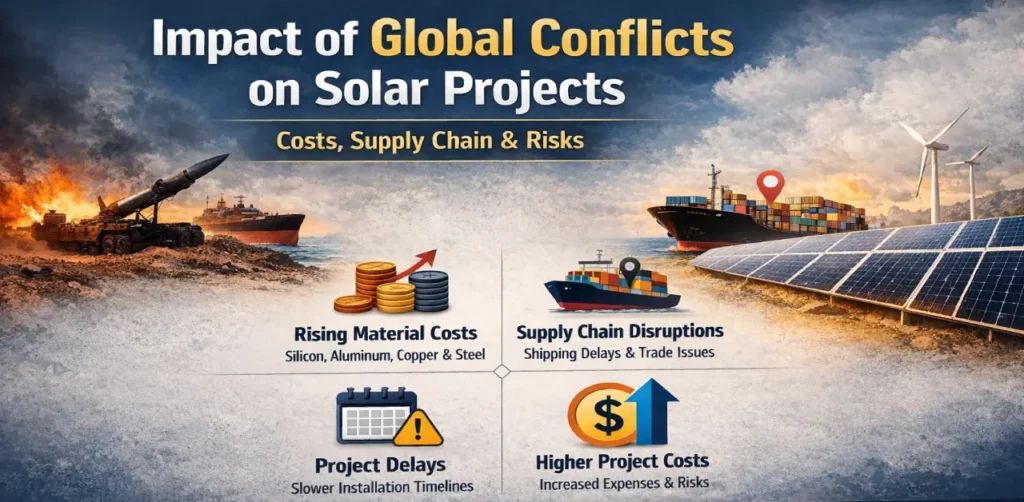
How Global Conflicts Impact the Solar Industry
The solar industry relies on a complex global supply chain. Solar modules, inverters, mounting structures, and electrical components are often manufactured in different countries and transported worldwide.
When geopolitical tensions rise, several challenges can emerge:
- Higher global transportation costs
- Disruptions in supply chains
- Increased raw material prices
- Delays in equipment delivery
Although solar power generation itself does not depend on fossil fuels, the manufacturing and transportation of solar components rely on global industrial and logistics systems. Any instability within these systems can influence the solar market.
Rising Costs of Solar Materials Impact of global conflicts
Solar power systems require several essential materials for manufacturing and installation. Key materials include:
- Silicon used in photovoltaic cells
- Aluminum used for panel frames and mounting structures
- Copper used in wiring and electrical connections
- Glass used to protect solar cells
- Steel used in structural components
If global conflicts disrupt mining operations, manufacturing facilities, or transportation routes, the prices of these materials may increase. In addition, rising energy costs can raise manufacturing expenses, which can impact the overall cost of solar panels and solar power systems.
Solar Supply Chain Challenges Impact of global conflicts
Many solar components are manufactured in major production hubs such as China and then shipped to project locations across the world.
However, geopolitical tensions can affect international trade routes and shipping operations. When shipping routes become risky or restricted, freight costs increase and delivery times may become longer.
This can delay the supply of critical solar components such as:
- Solar panels
- Solar inverters
- Mounting structures
- Energy storage systems
For large solar installations, these delays can affect project schedules and installation timelines.
Impact on Solar Project Costs
Solar project costs depend on several factors, including equipment, transportation, engineering, and installation.
When global conflicts disrupt supply chains, solar project developers may experience increases in:
- Solar module prices
- Logistics and shipping costs
- Electrical component prices
- Structural material costs
Despite short-term fluctuations, solar energy remains a strong long-term investment. Most solar systems operate for more than 25+ years, allowing businesses to recover their investment through long-term electricity savings.

Rising Global Demand for Solar Energy
Interestingly, geopolitical tensions often accelerate the shift toward renewable energy. Countries and businesses begin searching for more stable and independent energy sources.
Solar power offers several advantages:
- Reduced dependence on imported fuels
- Stable and predictable long-term energy costs
- Clean and sustainable electricity generation
- Improved energy security for businesses
Because of these benefits, global solar installations continue to grow each year despite short-term economic or geopolitical uncertainties.
The Role of Solar Companies
Solar companies must adapt to evolving global conditions by strengthening supply chains and improving project planning.
Organizations such as Solluz Energy Pvt Ltd focus on:
- Building reliable supplier partnerships
- Designing efficient solar systems
- Maintaining careful project planning and scheduling
- Delivering high-quality installation standards
These strategies help ensure stable project delivery even during periods of global uncertainty.
Looking Ahead: The Future of Solar Energy
Despite global conflicts and market fluctuations, the long-term outlook for solar energy remains extremely positive.
Countries around the world are increasing investments in renewable energy to reduce carbon emissions, strengthen energy security, and support sustainable economic growth.
As solar technology continues to improve and adoption increases, solar energy will remain a key pillar of the global energy transition.
Final Thoughts
Global geopolitical tensions can create short-term challenges for the solar industry through supply chain disruptions, rising material costs, and logistical delays.
However, the long-term advantages of solar energy remain clear. Solar power continues to provide reliable, clean, and cost-effective electricity for businesses and industries worldwide.
With proper planning and expertise, companies like Solluz Energy Pvt Ltd will continue to support the transition toward sustainable energy and help businesses unlock the full benefits of solar power.
