
As Battery Energy Storage Systems (BESS) continue to grow across commercial, industrial, and utility-scale applications, system design is becoming more important than ever. Among all technical decisions, one factor plays a major role in determining system efficiency, infrastructure cost, scalability, and long-term performance — voltage selection.
Today, the industry is rapidly moving toward high-voltage DC architecture, especially in the range of 1000VDC to 1500VDC, because traditional lower-voltage systems are no longer efficient for large modern energy applications.
At Solluz Energy, we believe voltage selection is not just an electrical specification — it is the backbone of a high-performance BESS system.
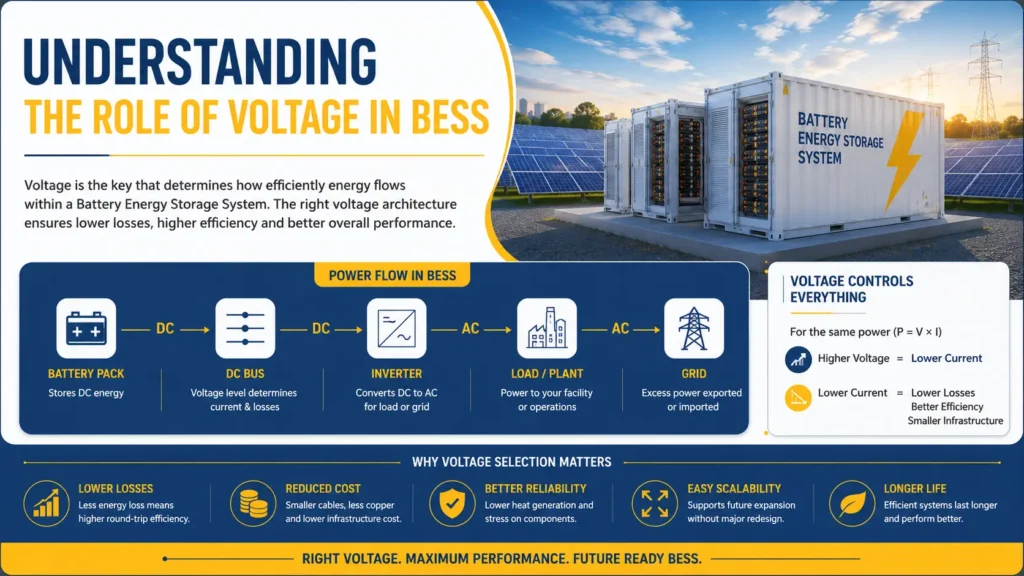
Understanding the Role of Voltage in BESS System
In a Battery Energy Storage System, voltage determines how efficiently electrical power flows between:
- Battery packs
- Inverters
- DC bus
- Load
- Grid connection
A simple principle applies in every power system:
Higher Voltage = Lower Current
When voltage increases:
- Current decreases
- Cable losses reduce
- Heat generation decreases
- System efficiency improves
This becomes extremely important in large-scale BESS projects where energy transfer happens continuously at high power levels.
Why Low-Voltage DC Systems Create Limitations
Many conventional storage systems still operate below 1000VDC. While these systems may work for smaller projects, they become inefficient as capacity increases.
Challenges in Below 1000VDC BESS System
Higher Current Flow
Lower voltage requires higher current to deliver the same amount of power.
This results in:
- Higher transmission losses
- Increased cable heating
- Lower overall efficiency
Larger Cable Requirement
High current requires:
- Thick cables
- More copper
- Bigger cable trays
- Larger switchgear
This increases both project cost and installation complexity.
Higher Energy Losses
As current increases, I²R losses also rise rapidly.
This leads to:
- Reduced round-trip efficiency
- Higher operational losses
- Additional thermal stress on components
Limited Scalability
Low-voltage systems become difficult to scale in:
- Utility-scale projects
- Solar parks
- Industrial applications
- Grid-connected BESS systems
As project size grows, infrastructure requirements increase significantly.
Why 1000VDC to 1500VDC Is the Future of BESS System
Modern energy storage projects are increasingly adopting 1000VDC to 1500VDC architecture because it improves both technical and commercial performance.
Benefits of High-Voltage DC Architecture
Lower Current & Higher Efficiency
Higher voltage allows the same power transfer at much lower current.
This helps reduce:
- Cable losses
- Heat generation
- System inefficiencies
Result:
Better overall plant performance.
Smaller Cable Size
Lower current means:
- Smaller cables
- Reduced copper requirement
- Compact infrastructure
This significantly reduces BOS (Balance of System) cost.
Better Suitability for Large Projects
1000VDC to 1500VDC systems are ideal for:
- Utility-scale solar plants
- Grid-scale BESS
- Renewable energy parks
- Large industrial facilities
- Solar + storage hybrid projects
These applications require efficient high-capacity energy transfer where lower-voltage systems become impractical.
Improved Power Density
High-voltage DC systems can transfer more power using the same infrastructure footprint.
Benefits include:
- Better space optimization
- Compact system design
- Higher energy density
- Faster project scalability
BELOW 500VDC
━━━━━━━━━━━━━━━━━━━━━━━► High Current
━━━━━━━━━━━━━━━━━━━━━━━► High Losses
━━━━━━━━━━━━━━━━━━━━━━━► Large Infrastructure
500VDC – 1000VDC
━━━━━━━━━━━━━► Moderate Efficiency
━━━━━━━━━━━━━► Medium Infrastructure
1000VDC – 1500VDC
━━━━━━━► Lower Current
━━━━━━━► Lower Losses
━━━━━━━► Better Efficiency
━━━━━━━► Compact Infrastructure
Diagram: Why High-Voltage DC Systems Perform Better
1000VDC – 1500VDC SYSTEM
- Lower Current Flow
- Reduced Heat Generation
- Lower Energy Losses
- Smaller Cable Size
- Reduced Copper Usage
- Better Round-Trip Efficiency
- Faster Scalability
- Higher Power Density
- Optimized Infrastructure
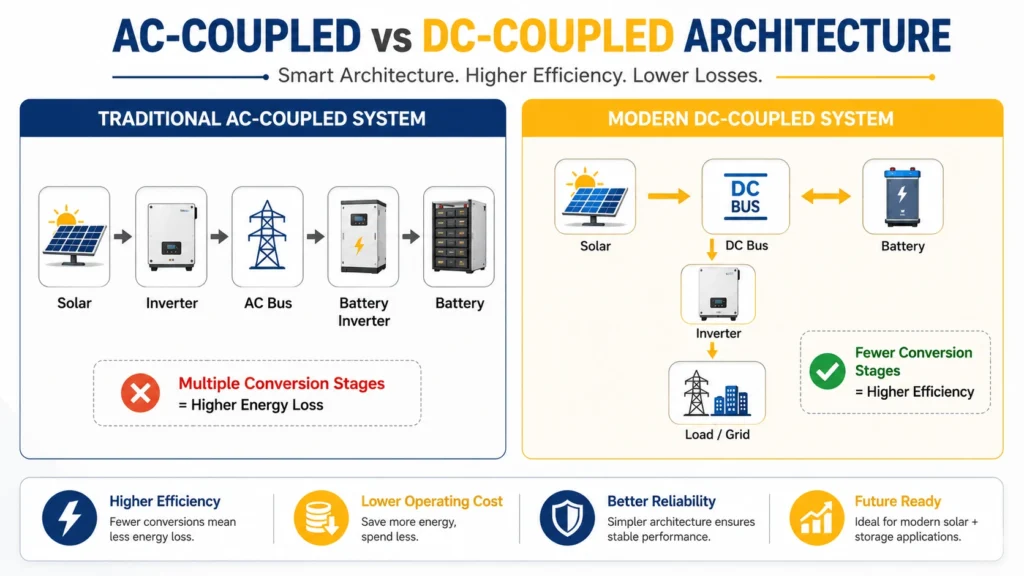
The Shift Toward DC-Coupled BESS System Architecture
The renewable energy industry is moving rapidly toward DC-coupled systems where batteries connect directly to the DC bus.
This architecture helps:
- Eliminate multiple conversion stages
- Reduce energy loss
- Improve charging efficiency
- Increase overall system performance
Modern inverter and battery technologies are now specifically designed around 1000VDC and 1500VDC architecture because these voltage levels are more suitable for future large-scale renewable projects.
How Solluz Energy Supports Modern BESS System Infrastructure
At Solluz Energy, we design advanced solar and energy storage systems aligned with modern high-voltage DC architecture.
Our engineering approach focuses on:
- Higher efficiency
- Reduced operational losses
- Better scalability
- Optimized infrastructure
- Long-term reliability
We help businesses select the right BESS architecture based on actual operational requirements, future expansion plans, and project economics.
Conclusion
Voltage selection is one of the most critical factors in designing a high-performance Battery Energy Storage System.
While low-voltage systems may still work for smaller projects, they become increasingly inefficient for large-scale applications.
Modern energy infrastructure is now moving toward 1000VDC to 1500VDC systems because they provide:
- Lower current
- Lower losses
- Reduced cable requirement
- Better scalability
- Higher efficiency
- Compact infrastructure
As renewable energy adoption accelerates, high-voltage DC architecture will become the foundation of efficient, scalable, and future-ready BESS systems.